From a video that changed YouTube to a bug that endangered aeroplanes, or a message capable of crashing cell phones, software bugs often come with compelling stories. Examining these incidents allows other companies to learn valuable lessons.
Because software influences nearly every aspect of our lives, the emergence of a bug can lead to situations ranging from mildly amusing to seriously damaging for the organisations involved. Businesses may suffer financial losses, lose valuable data, and see their reputations tarnished. Unfortunately, the public often bears the consequences, facing privacy breaches or even threats to their safety.
At TITANS, we have compiled a list of 15 remarkable bugs that have captured public attention. Some amused the internet, others sparked outrage, and a few fundamentally changed user behaviour.
1. The Morris Worm
Originally conceived as a harmless experiment, the Morris Worm is widely regarded as one of the first major public attacks on computer systems. In 1988, with fewer than 100,000 computers connected globally, most online organisations operated on trust. Robert Morris, then a student at Cornell University, developed the worm to highlight vulnerabilities in this environment and to demonstrate how quickly a security breach could spread.
The worm queried each computer it encountered to determine whether it already contained a copy of its code. If the computer was uninfected, the worm executed its payload. If the computer responded “yes”—indicating it was already infected—the worm refrained from duplicating itself. However, Morris, aiming to prevent skilled programmers from circumventing the worm, programmed it to replicate itself after seven affirmative responses regardless. This flaw led to a widespread crisis: many computers ran multiple instances of the worm simultaneously, causing system performance to plummet. Emails were delayed for several days; some institutions resorted to wiping their systems, while others disconnected their computers from the network for up to a week. The full extent of the damage was difficult to assess, but estimates ranged from $100,000 to several million dollars.
Shortly after the attack, a desperate Morris contacted two friends and confessed that he had released the worm and lost control of the situation. He asked one of them to post an anonymous message on his behalf, including a brief apology and instructions on how to remove the program. Unfortunately, due to the severe network disruption, only a few people received the information in time.
Morris later became the first individual convicted of computer fraud; however, his actions underscored the critical importance of cybersecurity. In response, companies began investing in password management software and firewalls, public trust in the internet eroded, and users became more cautious online. Morris eventually became a professor at MIT, and the worm’s source code is now preserved as a museum exhibit on a floppy disk at the university in Boston.
2. The Invisible Mouse
In 2018, many users encountered a puzzling issue with their mouse cursor: although it remained functional, it became invisible on their computer screens. This problem stemmed from a conflict between display drivers and a Windows 10 feature that enabled customisation of the cursor’s size and colour. The bug caused significant confusion, but was ultimately fixed.
3. The Heartbleed Bug
The Heartbleed Bug was a critical vulnerability discovered in 2014 in the OpenSSL cryptographic software library. This flaw allowed attackers to extract sensitive data from the memory of millions of web servers, compromising the security of users’ personal and financial information. The widespread impact of the Heartbleed bug underscored the necessity of rigorous security testing and highlighted the risks of relying on open-source software without adequate oversight.
4. Even Gates’s Computer Crashes
In 1998, Bill Gates took the stage to demonstrate the new Plug and Play feature in Windows 98, designed to automatically recognise new hardware. Unexpectedly, the demonstration laptop crashed in front of thousands of journalists and spectators, displaying the infamous blue screen of death. The audience erupted in laughter, and the incident—later dubbed “Plug and Pray”—became one of Microsoft’s most memorable public missteps. Nevertheless, Windows 98 went on to achieve widespread commercial success.
5. A Hidden Bug Cost Hundreds of Lives
Several crashes have been attributed to the Boeing 737 Max aircraft models. In 2018, Lion Air Flight JT 610, operating a Max 8 model, tragically resulted in the loss of 189 lives. Investigations revealed that a sensor malfunction caused the Manoeuvring Characteristics Augmentation System (MCAS) to continuously force the aircraft’s nose downward. The flight crew was ultimately unable to regain control, leading to the aircraft’s fatal descent into the ocean. In 2019, a similar tragedy occurred when Ethiopian Airlines Flight 302, also a Max 8 model, crashed and claimed 157 lives. Boeing later acknowledged that a software bug activated the MCAS based on incorrect data.
Media investigations revealed that, even during the aircraft’s development, Boeing withheld critical information about the MCAS and its unpredictable behaviour from its own test pilots. Whistleblowers testified before the U.S. Congress, describing a high-pressure, unstable manufacturing environment in which profit was prioritised over safety. Former employee Ed Pierson stated that he had repeatedly issued formal warnings to management regarding unsafe shortcuts, but his concerns were ignored. The U.S. House Transportation Committee ultimately linked the safety breaches to Boeing’s accelerated production timeline and cost-cutting strategies.
6. The scanner malfunctions when a child is asleep
Another bug report was posted on a developer discussion forum. A user named rich_sasha explained, “I can’t scan documents while my daughter is sleeping. When she’s awake, everything works fine, but as soon as we put her in her crib and I try to use my free time to scan documents, the scanner stops working.” He eventually discovered the cause: the device was connected to Wi-Fi, and the router was in the child’s room next to a baby monitor. Although the baby monitor wasn’t connected to Wi-Fi, it still interfered with the signal. The same issue occurred when the baby monitor was placed near his laptop, causing the Wi-Fi connection to drop.
7. A Company’s Collapse in 45 Minutes
In 2012, Knight Capital Group implemented new software. Unfortunately, a minor bug in the code caused the system to inadvertently execute a large number of stock trades. In less than an hour, the company lost $440 million and was forced to be acquired by another firm to remain operational. Since this incident, financial institutions have adopted rigorous testing protocols for software updates prior to deployment.
8. The Bug That Travelled Through Time
In 2016, several Facebook users received notifications stating they had been friends for 46 years—even though the social network was founded in 2004. Facebook mistakenly assumed these friendships began before the widespread use of computers, assigning a start date of December 31, 1969, to some users. This date was not arbitrary; it is related to Unix time, which counts seconds from January 1, 1970. While Facebook eventually resolved the issue, the unusual bug became public knowledge before a fix was implemented.
9. Treacherous Scooters
Imagine riding an electric scooter at high speed when, without warning, the brakes suddenly engage. This scenario has affected many Lime scooter users; approximately 1,500 people have suffered injuries such as broken collarbones or jaws, and at least four fatalities have been reported. The root cause was a technical issue in the firmware. In New Zealand, scooters were temporarily banned in two cities owing to this problem, and according to Lime, every defective unit was promptly removed. Nevertheless, a similar issue also arose within the company’s Swiss fleet.
10. The Bieber Bug
Did you know that, in the past, an overwhelming number of likes on a single celebrity’s post could have brought down Instagram’s entire infrastructure? When Justin Bieber posted a selfie, the surge of fan reactions overwhelmed the computer networks. At that time, Instagram utilised a memory cache system in its data centres to store the most popular content in high-speed memory across thousands of servers. Individual likes were loaded from disk until the cache became overloaded, crippling Instagram with a glitch. Since then, the platform has updated its software to prevent the so-called “Bieber bug” and has migrated to multiple Facebook data centres.
11. The Bermuda Triangle
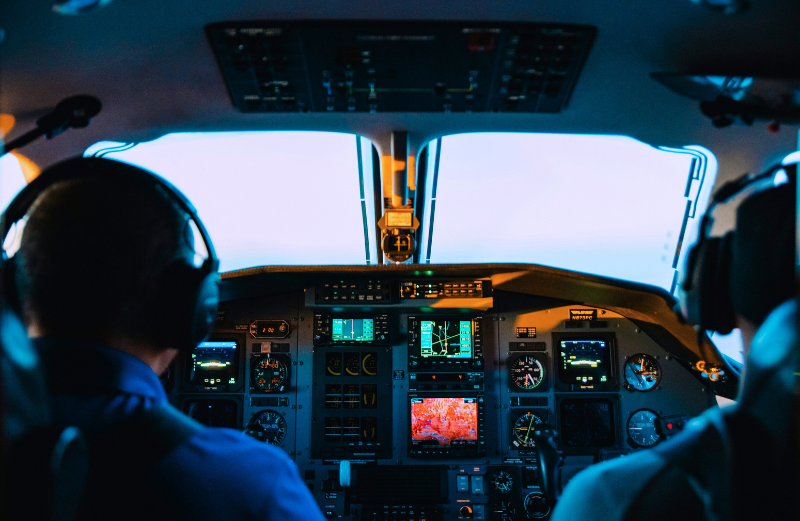
In 2019, being a pilot of a Boeing 737 Next Generation was a daunting experience. Due to a software glitch, the cockpit screens would switch off prior to landing. This issue repeatedly occurred at the same seven airport runways in the United States, all located in the west. The problem was traced to the latitude and longitude coordinates, which triggered a specific memory interaction between the onboard computers. As a result, the screens stopped displaying any information until a different runway was selected in the flight plan.
12. “Gangnam Style” Changed YouTube
The YouTube team never anticipated that any video would surpass 2,147,483,647 views. As a result, the platform initially used a 32-bit integer. However, when the music video for the song “Gangnam Style” went viral, YouTube was forced to transition to a 64-bit integer. Today, a video can accumulate as many as 9,223,372,036,854,775,808 views.
13. International Internet Outage
Popular websites, e-commerce platforms, social media sites and even government services were all affected by the Cloudflare outage on 2 July 2019. The outage was caused by a configuration bug during the routine deployment of a new rule in the Web Application Firewall software. As a result, the entire Cloudflare network went offline, causing widespread service disruptions for numerous websites and online services that relied on its infrastructure. This was not an isolated incident; Cloudflare experienced several outages in the previous year as well. Organisations should proactively prepare contingency plans to minimise financial losses and safeguard their operations in the event of such emergencies.
14. A Bug in the Form of a Cursed Message
In 2015, users discovered a peculiar bug in the iOS system: receiving a text message containing a seemingly innocuous line of Arabic script would cause their phones to malfunction. The underlying issue was a Unicode text string that formed part of a much longer block of text and could not be fully displayed in notifications. When an iMessage containing this string appeared on the lock screen or as a pop-up notification, iOS attempted to display it, thereby exhausting its resources. This ultimately resulted in the iPhone restarting, messages being blocked, Springboard crashing, and similar issues.
Five years later, reports emerged of another unusual character sequence involving the Sindhi language and emojis. Once again, this issue caused iPhones running iOS 13.4.1 to malfunction. After receiving a notification, users found their iPhones became unresponsive and would often crash. Furthermore, the bug was not limited to text messages—any notification containing this character sequence could potentially crash an iPhone. The problem was rectified in iOS 13.4.5.
15. Have you tried turning the plane off and on again?
Did you know that aeroplanes are usually left powered on so that maintenance crews can carry out system checks? However, in the case of the Airbus A350, this was not possible. Due to a software bug, airlines were required to perform a hard restart of the aircraft every 149 hours; otherwise, unexplained malfunctions might occur.
Boeing, a competitor of Airbus, experienced a similar issue with its 787 Dreamliner aircraft. If the 787’s Generator Control Units (GCUs) remained powered on continuously for 248 days, a software bug could trigger emergency mode, resulting in a complete power outage. If such an outage occurred during a critical phase of flight—such as take-off, landing, or whilst manoeuvring in the air—it could result in a loss of control of the aircraft, with potentially catastrophic consequences.
These incidents underscore the profound impact that software has on both society and the economy. Today, success relies not only on code and algorithms but also on trust, security, and reliability.
If you are interested in becoming a tester who helps companies prevent costly incidents, explore our TITANS freelance IT projects. We will support your transition into the independent world of freelancing, where you can help organisations eliminate software bugs, enhance your portfolio, and connect with a vibrant community of tech professionals.