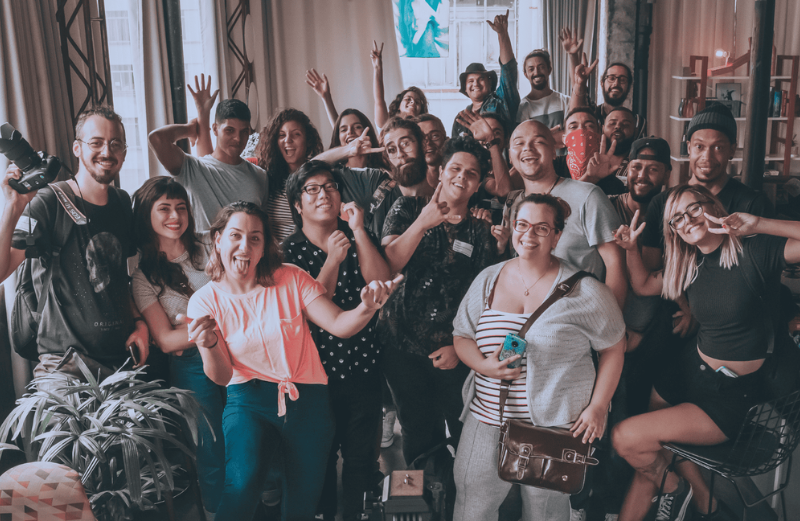
Many talented individuals have historically been excluded from the IT sector due to factors such as ethnicity, sexual orientation, gender, or health-related disabilities. However, an increasing body of research highlights the transformative impact that diversity in corporate culture has on a brand’s market success.
A 2022 study found that mental health outcomes are poorer among individuals who identify as non-binary, women, members of multiethnic or white ethnic groups, and those with caregiving responsibilities.
There is, however, a win-win solution that benefits both employers and underrepresented groups. Data shows that when companies foster an inclusive culture, all employees feel supported, contribute their unique talents and perspectives, and develop a strong sense of community. As a result, organisations can reach their full business potential, generate innovative solutions, and attract greater customer interest.
Which minority groups has the IT sector overlooked to date, and how can the industry better support their integration into the workforce?
Racial and Ethnic Diversity
Approximately 58% of professionals in the U.S. IT sector are white. The remainder of the workforce comprises 22% Asian Americans, 9% Latino Americans, and 7% African Americans.
Ethnic minority women are even less represented in the U.S. IT sector. Between 2007 and 2020, white women held 13% of IT positions, women of Asian and Pacific Islander descent held 7%, and Black women held 3%. Latin American and Hispanic women were the least represented, accounting for only 2% of IT roles.
In the United Kingdom, only 13% of senior IT professionals are from ethnic minorities. Across all roles, ethnic minorities represent approximately 25% of the sector, indicating that, even after entering the technology industry, they do not have access to the same advancement opportunities as their peers.
An Oxford study found that companies responded to 24% of job applications submitted by white candidates from Western countries, whereas only 15% of applications from ethnic minority candidates received attention from employers.
In the 12 months preceding the survey, 36% of Roma and Travellers reported experiencing discrimination when seeking employment, compared to only 16% in 2016. Although the incidence of discrimination is somewhat lower in the workplace, two out of five Roma and Travellers have still faced such treatment—a rate four times higher than in 2016.
One in three Black individuals in the EU is employed in a position for which they are overqualified. Compared to the general population, they are also three times more likely to hold low-skilled roles or temporary contracts.
One in four people considers it acceptable not to hire a Roma individual.
Nearly three out of four British women working in the IT sector have experienced racism in the workplace.
Many respondents indicated that they had either left or considered leaving their IT positions because they felt uncomfortable due to their race, ethnic origin, or socioeconomic background. This included 53% of individuals of Asian descent and women, 56% of Black respondents, and 58% of those of Hispanic or Latin American descent.
Kai Bond also faced challenges after relocating to predominantly white Seattle. In 2001, shortly after graduating from college, he became the only African American on a team of approximately 70 employees at an IT corporation.
He recalls an incident from his first week: “I walked into the office of an engineer who had been at Microsoft for 10 years. I explained, ‘I’d like to go over the specs and what you’re working on to see how I can assist you.’ I remember how he looked at me and replied, ‘You know what, you could help me. You could go home and mow my lawn.’”
Kai often reflected on this humiliating encounter, questioning whether it stemmed from his race, his youth, or his newcomer status at the company. He wondered if it was an instance of bullying or hazing.
Zackary Lemelle also experienced disparate treatment from the outset. In 1971, he enrolled in a computer operations course that promised a job offer upon completion. However, as the only Black participant, he learned this guarantee did not extend to him. When he sought employment elsewhere, IT companies declined to hire him, citing his lack of computer experience—even though at the time hardly anyone had such experience, as the technology was still emerging.
The data show that diversity in the technology sector has remained stagnant and low for decades. Notably, people of colour are 20% more likely than their white counterparts in IT to hold a college degree. Nevertheless, the situation appears to be deteriorating, as the proportion of IT leadership roles is decreasing and layoffs in the sector continue to disproportionately impact ethnic minorities.
It is also concerning that while the underrepresentation of women in senior management can be partly attributed to their disproportionate caregiving responsibilities at home, there is no comparable practical explanation for the lack of ethnic diversity. In fact, the decline in ethnic diversity is even more pronounced than that in gender diversity.
The predominance of white IT specialists is especially evident in software engineering, where only 22% of employees come from ethnic minority backgrounds. Software engineers, in particular, play a significant role in shaping the broader culture of the tech industry, as they are often among the first hires at startups. As Lexie Papaspyrou of the Tech Talent Charter notes, “It’s no wonder that the IT industry faces criticism for its exclusionary ‘bro-grammer’ culture when those who have the greatest influence on tech companies are often the least diverse.”
Zackarie later joined the sales team at Systems & Technology Corp., where he was prohibited from contacting white prospective customers in the South because, according to his supervisor, they would not accept him. At Johnson & Johnson, he advanced to director of systems and programming. After six months, he learned that an offsite meeting was being organised, but he was not invited. All 14 participants were white, and they collectively developed a strategy to have him dismissed. One participant criticised Zackarie for using “too many urban colloquialisms,” while another complained that he had visited her office without prior notice.
It was clear to Zackarie that the staff was uncomfortable with diversity in the company. “The worst part of all was that I saw a copy of the agenda. At the bottom of the page, there was a stick figure on a gallows labelled with my name. You can imagine how I felt,” he says.
“Facing racial microaggressions on a daily basis puts individuals in a state of heightened alertness. Constant vigilance can lead to significant anxiety,” explains Angela Neal-Barnett of the Kent State Program for Research on Anxiety Disorders Among African Americans. “When enduring racism becomes a necessity for providing for one’s family, and there appears to be no escape, a profound sense of hopelessness can develop, often resulting in depression.”
Kai’s race also led to his isolation throughout his entire career. While serving as a department head at Samsung, he encountered a situation in which the founder of a startup he was scheduled to meet immediately assumed upon his arrival that he was part of the IT support staff and began describing technical issues. In contrast, surveys indicate that, for Black women, the assumption is reversed: one in three reports that colleagues presume she is not on the IT team.
“This psychological burden has led many African American employees to stop going to the office and instead prefer remote jobs,” says Leron Barton, a longtime professional in the tech sector. “Reflecting on the racial microaggressions I experienced in the workplace, I often wonder whether some of these situations could have been avoided if I, or other African Americans, had chosen to launch our own startups.”
Harvard scientist David Williams has demonstrated that workplace racism has significant physiological consequences, including an increased risk of hypertension, as well as sleep and eating disorders. Discriminatory practices also impact compensation: while white job applicants were offered an average salary of $144,000, Black candidates received a final salary offer of $134,000 for identical positions. Comparatively, Asian American IT candidates were typically offered $145,000.
Recommendations for companies:
Educate colleagues on how to discuss ethnicity and race in the workplace to build their confidence and ability to engage in these conversations.
Clearly articulate practical expectations for staff in policies to ensure that cultural differences in interpretation do not create unfair barriers for minorities.
Establish an inclusive dress code and hairstyle policy that respects people’s cultural, ethnic, and racial identities.
Offer emotional, practical, and psychological support to employees impacted by global events related to their ethnicity or race, such as violence in the Middle East or racism associated with COVID-19.
Allies play a crucial role in addressing systemic issues within the organisation. When they speak out against discriminatory behaviour, their concerns are often taken more seriously, and they are less likely to face retaliation.
Sexual Orientation Diversity
Up to 27% of gay, lesbian, and bisexual individuals experienced challenges finding employment and/or faced difficulties at work in the 12 months preceding the survey due to their sexual orientation.
According to a 2018 study, one in three individuals in the LGBTQ+ community who had previously come out chose not to be open about their orientation after starting their first job. This trend was especially prevalent among younger employees.
Women are significantly less likely than men to publicly identify as gay.
Among 235 UK organisations that recognise non-binary genders, only 0.09% of IT employees identify as non-binary.
In the United Kingdom, 0.5% of the population identifies as transgender; however, in the tech sector, only 0.17% of employees identify as transgender.
Compared to all respondents from the LGBTI community, trans and non-binary individuals were more likely to be unemployed and more likely to be unable to work due to long-term health issues.
Transgender individuals face the highest levels of discrimination; they are often not hired or are dismissed because they align their appearance, body, and behaviour with their identified gender, or because they do not conform to expected gender roles and traditional gender stereotypes.
Lynn Conway, a renowned engineer in supercomputers and microchip design, has experienced this firsthand. Due to her transgender identity, Lynn’s significant work at IBM was kept secret for many years, and when she began her transition, the company terminated her employment. Lynn was subsequently compelled to withdraw from the public eye and start anew; however, she soon achieved success when the Department of Defence utilised her work on classified projects. At the beginning of the 21st century, she publicly came out as transgender and has since become a prominent advocate for the transgender community.
When selecting employees, companies may request only the personal information strictly necessary and must not inquire about sexual orientation or other unrelated personal data. Despite these protections, transgender individuals often encounter challenges when obtaining amended school certificates and diplomas. These documents can inadvertently disclose a person’s transgender status to prospective employers, potentially affecting their employment opportunities.
Transgender individuals also frequently face significant barriers to employment during their transition. Neither the Labour Code nor other relevant legislation requires employers to update employment confirmations upon request following a legally recognised gender amendment (i.e., when an individual’s gender or sex has been changed on their identification documents). As a result, such updates are often left to the employer’s discretion and goodwill.
Recommendations for Companies:
Establish organisational rules in the form of an anti-discrimination policy.
Designate a specific employee or department responsible for addressing cases of discrimination.
Focus on primary prevention to ensure that staff are informed about the consequences of discrimination.
Provide health benefits to support employees who are transitioning.
Invest in “Pride allies” who are trained, informed, and responsible for visibly and vocally supporting LGBTQ+ diversity within the company.
Recognise awareness days such as the International Day Against Homophobia, Biphobia, Transphobia, and Intersexphobia (IDAHOBIT).
Revise the language and content of family policies to ensure inclusivity for same-sex couples.
Ensure the availability of gender-neutral and accessible restrooms.
Implement targeted measures to support LGBTI+ colleagues, such as establishing employee support groups for these individuals and their allies. In Slovakia, leading international companies like Accenture and IBM have adopted similar practices.
An increasing number of companies are signing the Diversity Charter, which is being implemented by the Pontis Foundation.
TITANS has long been a signatory to the Corporate Challenge, an initiative launched in response to the terrorist attack on the LGBTI+ community on Zámocká Street in Bratislava. The goal of the 72 participating companies is to ensure equal rights, opportunities, and living conditions for every employee.
Health Diversity
In 2024, 23% of the working population in the UK had a health-related disability; however, only 6% of these individuals were employed in the technology sector.
August de los Reyes, a former design lead at Xbox, developed a health disability at the age of 42. He believes that individuals from this minority are often the pioneering innovators who develop solutions to assist people with disabilities.
Many people are unaware that much of the technology we use daily—including early typewriters, audiobooks, vibrating phones, and predictive text messaging—was originally developed to support individuals with disabilities, helping them to overcome physical and communication barriers.
It is important to realise that most people will, at some point in their lives, be directly or indirectly affected by a health-related disability—whether permanent, temporary, or related to caregiving. As such, companies have both a business and a moral obligation to remove barriers within the workplace and corporate culture to ensure that all individuals have access to engaging and meaningful careers.
When companies establish age-based expectations as part of employee programs or job requirements, they risk unfairly excluding individuals with health-related disabilities from valuable opportunities. Members of this group may require additional time to acquire certain qualifications.
Recommendations for Companies:
Take into account the impact of health-related disabilities on employees throughout every stage of their careers, not solely at the point of hire.
Offer employees regular opportunities to share and discuss their health-related disabilities. Rather than making assumptions about their needs, actively listen to their preferred methods of support.
Inquire whether employees identify as having a disability, what language they prefer to use when describing themselves, and which workplace accommodations will enable them to be productive, develop professionally, and integrate into the company culture.
During discussions, highlight the achievements and strengths of colleagues with disabilities. Consider implementing leadership development programs specifically designed for this group.
Ensure clarity regarding your legal obligations to support employees with health-related disabilities.
Develop recruitment policies that promote diversity and provide flexible work options.
Provide staff with comprehensive education on disability-related issues.
Encourage collaboration among employee support networks within your organisation to foster an intersectional approach to diversity. For example, facilitate connections between disability and health networks and those dedicated to gender equality, LGBTQ+ inclusion, or ethnicity.
Gender Diversity
Women are 65% more likely to be laid off than their male counterparts.
Approximately 39% of women report experiencing prejudice in the workplace.
Surveys indicate that women are consistently paid less than men for comparable work. For example, in Silicon Valley, men typically earn 61% more than women.
Women and non-binary individuals comprise just 29% of the workforce in British technology companies.
Only 20% of software engineering professionals are women or non-binary individuals.
One in three British women working in IT plans to quit, while a quarter are considering employment in a different industry.
Up to 80% of women have reported that dissatisfaction with career advancementopportunities influenced their decision to leave IT roles.
During her tenure at Uber, engineer Susan Fowler reported a manager for inappropriate sexual advances and provided chat logs as evidence to the HR department. She expected the company to discipline the manager; however, upper management instead informed her that the individual was a “high-performing employee.” Fowler was told she would either need to transfer to another team or continue working under the same manager, who subsequently threatened to terminate her employment for raising concerns. Fowler soon discovered that other women at Uber had experienced similar incidents, including harassment from the same manager.
“The only individuals unaware of the situation in Silicon Valley were those who actively avoided acknowledging the reality before them,” states Melinda Gates, philanthropist and co-founder of the Bill & Melinda Gates Foundation. “I do not believe there is a woman in the technology sector who has not encountered some form of bias or sexual harassment—including myself.” Arianna Huffington, founder and CEO of Thrive Global, asserts that organisations must reassess their values and reject the culture of elevating “high-performers” at the expense of acceptable conduct.
In 2015, a group of female investors and IT executives surveyed 200 women in senior positions in Silicon Valley. The results revealed that 84% had been told they were “too aggressive” at work, 66% had been excluded from important events due to their gender, and 60% had experienced unwanted sexual behaviour in the workplace—most often from supervisors. One-third of respondents expressed concerns about their personal safety, and nearly 40% chose not to report incidents for fear of retaliation. According to Therese Lawless of Lawless & Lawless, terminating whistleblowers remains a common form of retaliation against women who report discrimination.
In Slovakia, more than half of women are considering leaving their current jobs. According to Aj Ty v IT, an organisation long supported by TITANS, this represents a record high. The survey challenges the stereotype that family obligations are the primary barrier to women’s careers. Instead, respondents identified pay and working conditions, lack of education and skills, and limited experience as the most significant challenges. Additionally, nearly 47% of women reported that a long-term fear of failure continues to hold them back.
Many individuals also face challenges accessing mentoring programs, encounter unconscious biases in performance evaluations, and experience systemic barriers. Additionally, workplace structures and tools are frequently designed with the assumption that employees are men. For instance, personal protective equipment and other essential tools in the IT and engineering industries are often not tailored for women, discouraging their participation and advancement in these fields.
Given the accelerating pace of technological progress, it is critical to ensure that diverse groups are actively involved in developing AI tools and other technologies that shape our society. Failing to do so risks perpetuating inequalities within our digital infrastructure.
Recommendations for companies:
Adapt work policies and tools to make them inclusive.
Implement a flexible work environment that accommodates the diverse needs of staff.
Strive to collaborate with local and diverse suppliers.
Create economic opportunities for businesses led by women and individuals from underrepresented groups.
Remove potential biases from hiring processes to promote fairness and inclusivity.
Support women leaders by offering mentoring and sponsorship opportunities.
Guarantee pay equity and equal opportunities for career advancement.
Actively foster alliances with men within corporate culture. This does not imply that men should speak on behalf of women; rather, their support can help create conditions where women’s voices are heard, valued, and considered.
Women often shoulder a greater share of household responsibilities. Providing increased flexibility, such as remote work options, can help them retain their positions and advance in their careers.
Why Inclusion Brings Success to Teams
Diversity is not only a matter of social responsibility, but also a significant business advantage. It grants organisations access to a broad pool of untapped talent, adding substantial value to the IT ecosystem. Research demonstrates that inclusive workplaces are more competitive, progressive, and resilient in the face of market changes.
A 2017 study found that diverse teams make better business decisions in up to 87% of cases, reach those decisions twice as quickly, and require half as many meetings to do so. Research by the Boston Consulting Group revealed that diverse teams generate 19% higher revenue and develop more relevant products by responding more effectively to evolving customer needs and reflecting the experiences of diverse groups. In contrast, homogeneous teams are more susceptible to groupthink, while diverse teams are more likely to evaluate ideas comprehensively and foster innovation. This is further supported by the Harvard Business Review, which states: “Success in a highly uncertain competitive environment requires creative thinking, which diverse departments possess in greater abundance.”
“Diversity encompasses a range of perspectives, ideas, and approaches, allowing teams to develop solutions that address challenges from multiple viewpoints,” says consultant and researcher Anna Powers. Cultural diversity in the workplace also fosters stronger teamwork among employees, leading to improved performance. Additionally, as organisations become more inclusive, their financial results benefit from increased productivity.
Research by McKinsey indicates that companies with gender-diverse boards are 25% more likely to achieve profitability. These organisations are also more likely to implement progressive management practices that enhance employee satisfaction, such as work-life balance initiatives. Moreover, compared to their male counterparts, female board members are more likely to prioritise social issues—including income inequality, climate change, and human rights—as integral to corporate strategy.
According to McKinsey, organisations with more than 30% women in leadership roles outperform those with fewer women in management. Firms that exhibit greater gender diversity experience lower employee turnover and higher levels of engagement. When women hold numerous leadership positions, employees are more invested in the company and perceive it as a fairer workplace.
Furthermore, a survey conducted by the International Labour Organisation found that inclusive organisations are 57.8% more likely to enhance their reputation. Customers are more inclined to purchase products from brands that actively promote diversity in advertising. Additionally, employees who view their workplace as inclusive are more likely to believe that their company upholds strong ethical values.
The vast majority of job seekers value companies that are committed to diverse hiring practices. Employing individuals who speak multiple languages is also a significant asset for brands seeking international expansion.
Conclusion
Promoting diversity does not require a company to overhaul every aspect at once. A BCG study found that even gradually implementing small changes in management composition can yield significant results.
Leadership plays a crucial role in fostering a team that genuinely embraces diversity. Leaders set the tone through their communication, the diversity of their teams, the behaviours they tolerate, and their stance against discrimination.
Moreover, diversity and inclusion in the workplace begin as early as the job posting. The language used in job advertisements can attract or dissuade different segments of society. “For example, phrases such as ‘looking for someone energetic’ may deter older candidates, while adjectives like ‘confident and motivated’ may appeal more to men, and ’empathy and honesty’ may resonate more with women,” notes Sara Chandran of Fresh and Fearless.
Understanding our unconscious biases is essential to fostering an environment that values diversity. As a result, many organisations offer training on this important topic.